
0
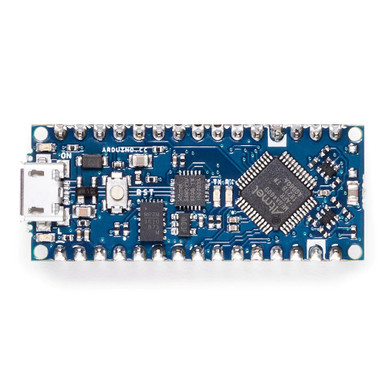
The Nano Every is Arduino’s 5V compatible board in the smallest available form factor: 45x18mm! The Arduino Nano is the preferred board for many projects requiring a small and easy to use microcontroller board. The small footprint and low price, make the Nano Every particularly suited for wearable inventions, low-cost robotics, electronic musical instruments, and general use to control smaller parts of a larger projects. The Arduino Nano Every is an evolution of the traditional Arduino Nano board but features a lot more powerful processor, the ATMega4809. This will allow you to make larger programs than with the Arduino Uno (it has 50% more program memory), and with a lot more variables (the RAM is 200% bigger). An Improved Arduino Nano If you used Arduino Nano in your projects in the past, the Nano Every is a pin-equivalent substitute. The main differences are: a better processor, and a micro-USB connector. The board comes in two options: with or without headers, allowing you to embed the Nano Every inside any kind of inventions, including wearables. The board comes with tessellated connectors and no components on the B-side. These features allow you to solder the board directly onto your own design, minimizing the height of your whole prototype. Oh, and did we mention the improved price? Thanks to a revised manufacturing process, the Arduino Nano Every costs a fraction of the original Nano … what are you waiting for? Upgrade now! Get to Know More To know more about the history of the Nano Every don’t miss the interview with Dario Pennisi, Arduino’s hardware and firmware development manager, who led the development of this board. Getting Started The Getting Started section contains all the information you need to configure your board, use the Arduino Software (IDE), and start tinkering with coding and electronics. Tech specs The Arduino Nano Every is based on the ATMega4809 microcontroller. Microcontroller ATMega4809 (datasheet) Operating Voltage 5V VIN min-MAX 7-21V DC Current per I/O Pin 20 mA DC Current for 3.3V Pin 50 mA Clock Speed 20MHz CPU Flash Memory 48KB (ATMega4809) SRAM 6KB (ATMega4809) EEPROM 256byte (ATMega4809) PWM Pins 5 (D3, D5, D6, D9, D10) UART 1 SPI 1 I2C 1 Analog Input Pins 8 (ADC 10 bit) Analog Output Pins Only through PWM (no DAC) External Interrupts all digital pins LED_BUILTIN 13 USB Uses the ATSAMD11D14A (datasheet) Length 45 mm Width 18 mm Weight 5 gr (with headers) Conformities The following Declarations of Conformities have been granted for this board: GB4943 WEE RCM RoHS CE FCC UKCA REACH OSH: Schematics The Arduino Nano Every is open-source hardware! You can build your own board using the following files: EAGLE FILES IN .ZIP SCHEMATICS IN .PDF FRITZING IN .FZPZ Pinout Diagram Download the full pinout diagram as PDF here. Download the Fritzing file here. FAQs Batteries, Pins and board LEDs Batteries: the Nano Every has no battery connector, nor charger. You can connect any external battery of your liking as long as you respect the voltage limits of the board. Vin: This pin can be used to power the board with a DC voltage source. If the power is fed through this pin, the USB power source is disconnected. This pin is an INPUT. Respect the voltage limits of 7-21V to assure the proper functionality of the board. 5V: This pin outputs 5V from the board when powered from the USB connector or from the VIN pin of the board. 3.3V: This pin outputs 3.3V through the on-board voltage regulator. LED ON: This LED is connected to the 5V input from either USB or VIN.